 WattRoad
1 kWh comparison
BLUETTI Elite 100 V2 vs. Anker SOLIX C1000 Gen 2
Compare U.S. capacity, continuous output, weight and calculated runtime. See when the C1000 Gen 2’s extra output matters and when it does not.
On this page
The U.S. models side by side
The table below uses the standalone stations in our catalog, without solar panels or extra batteries. Open each model sheet for its manufacturer links. The comparison is based on published specifications and calculations, not hands-on testing.
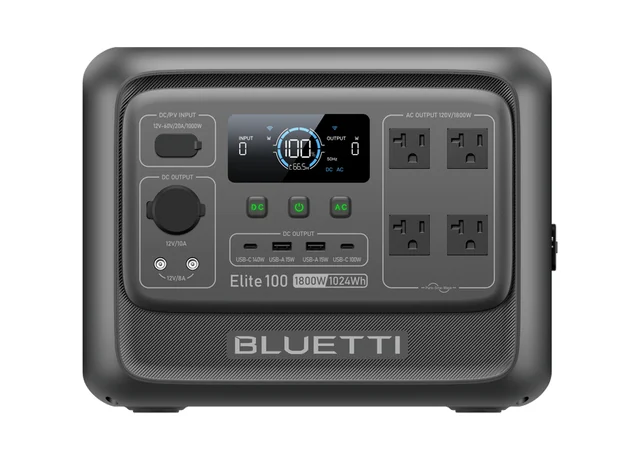
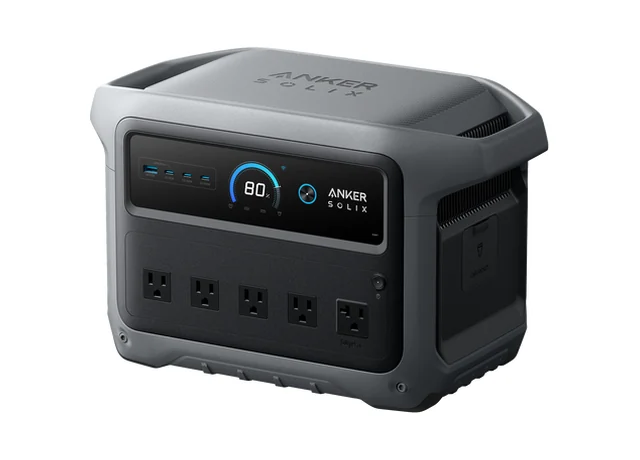
| Compare | BLUETTI Elite 100 V2 | Anker SOLIX C1000 Gen 2 |
|---|---|---|
| Capacity | 1,024 Wh | 1,024 Wh |
| Continuous AC | 1,800 W | 2,000 W |
| Weight | 25.4 lb | 24.9 lb |
| AC voltage | 120 V AC | 120 V AC |
| At a steady 100 W | 8.2 h | 8.2 h |
Same Wh: the runtime calculation is a tie
At 100 W, each battery calculates to about 8.2 hours: 1,024 × 0.8 ÷ 100. At 500 W, both calculate to about 1.6 hours. These shared assumptions make the capacities comparable; they do not establish that the two inverters have identical real-world efficiency.
If your main problem is getting through a longer workday, moving from one of these batteries to the other does not add rated energy. Calculate the devices’ actual energy needs first; a larger battery class may solve a runtime shortage more directly than a higher output rating.
When the extra 200 W matters
A hypothetical steady 1,900 W AC load exceeds the Elite 100 V2’s 1,800 W continuous rating and falls below the C1000 Gen 2’s 2,000 W rating. The Anker still needs to meet the exact appliance, outlet and startup requirements. Its 1,024 Wh battery calculates to only about 26 minutes at that steady draw under our assumption.
A 100 W laptop-and-internet setup sits far below both continuous limits. In that case, compare useful ports, size and the current total purchase cost instead of choosing by the largest watt figure.
Carrying and charging are separate decisions
The listed weights are 11.5 kg for the BLUETTI and 11.3 kg for the Anker: roughly 0.4 lb apart. That small difference may be less important than whether the shape and handle work for where you carry it. Neither is a pocket-sized travel battery.
Compare charging using your actual panel or outlet and the exact input specifications. A maximum input rating is not a promise of that charging power throughout the session. This comparison does not rank real charging speed or noise because we have not measured them.
Which should you shortlist?
Shortlist the Anker when its higher continuous output solves a specific requirement. Keep the BLUETTI in the comparison when your load already fits within 1,800 W and its ports or current offer better suit your setup. We do not declare a price winner without a current like-for-like offer.
For either one, confirm the U.S. voltage, the exact device connections and any startup requirement. Open the model sheet to check the current seller offer; the purchase button stays on that sheet.
Calculate your own setup
Choose devices and hours in the calculator, then open model details to compare the available capacity and output.
Choose my devices →Common questions
Will the Anker run longer because it has 2,000 W?
Not because of that rating alone. Both store 1,024 Wh. Our identical-load calculation is the same; actual usable energy and inverter behavior can differ.
Is the C1000 Gen 2 the same as the original C1000?
No. This comparison is specifically for the C1000 Gen 2. Do not substitute the original C1000’s capacity or expansion specifications.
Are these tested runtime results?
No. They are calculations using 80% of rated energy, a steady load and no recharge. Manufacturer specifications and product tests answer different questions.
Sources and calculation method
Source information was checked on the update date above. The numerical scenarios are WattRoad estimates, not hands-on product tests. The 80% usable-energy assumption is explained in our methodology. How we compare →
- BLUETTI Elite 100 V2 — U.S. specifications ↗Capacity and output; weight also checked in the U.S. manual.
- Anker SOLIX C1000 Gen 2 — U.S. specifications ↗Gen 2 capacity, output and net weight.